
The Challenge
Users don't think in devices. They think in tasks.
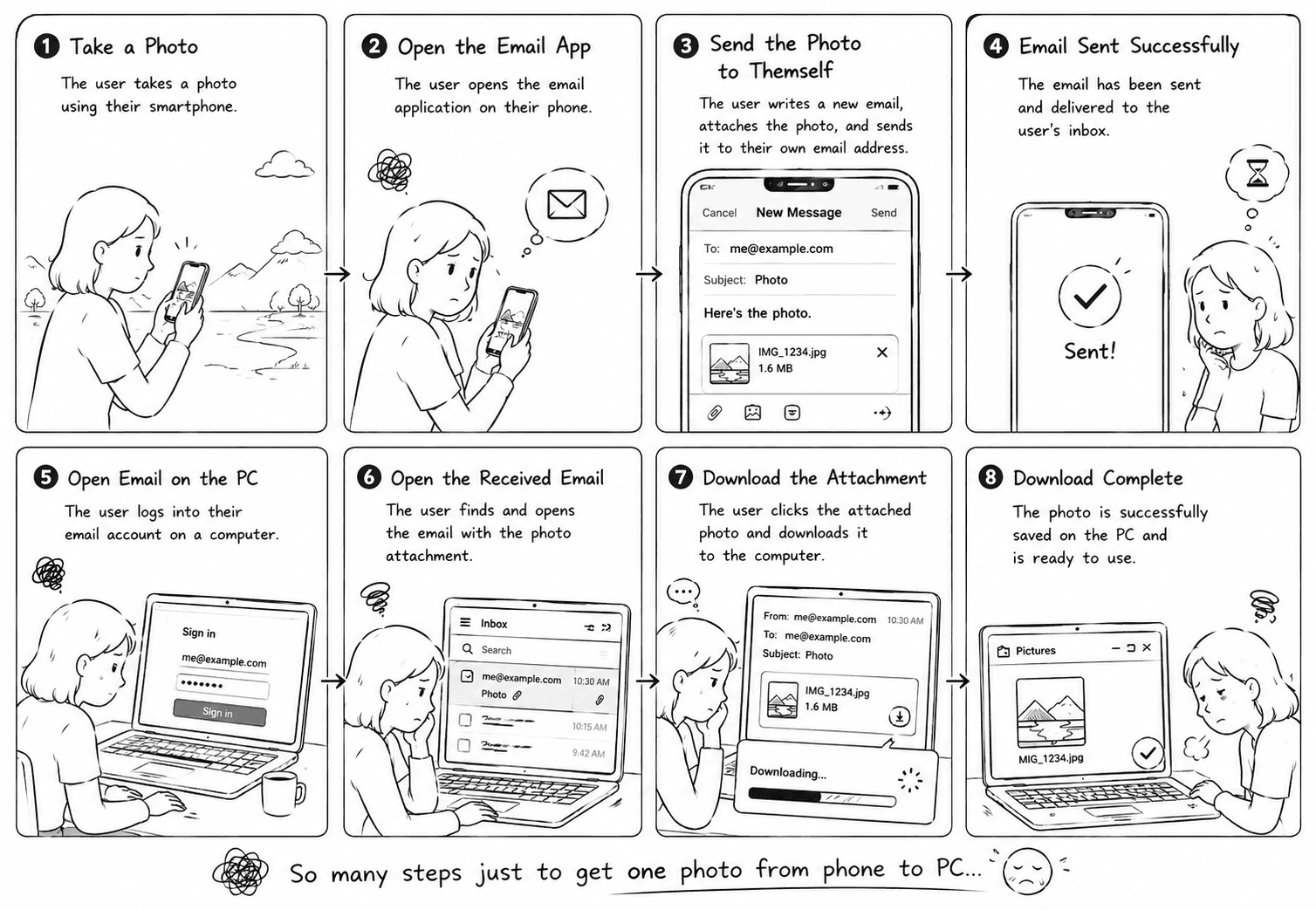
img:User want to send a photo to their PC
People don't think in terms of phones, PCs, or tablets—they think in terms of goals. The experience often breaks due to disconnected systems, inconsistent interfaces, and unclear mental models. Cross-device experiences are not only a technical challenge but also a UX challenge of continuity.
The Opportunity
Cross‑device experiences are not about moving files. They are about preserving context.
68%
Users switch devices during a task
53%
Lose context during transitions
31%
Repeat actions unnecessarily
Understanding Cross-device Behavior
Users don't switch tasks. They switch devices.
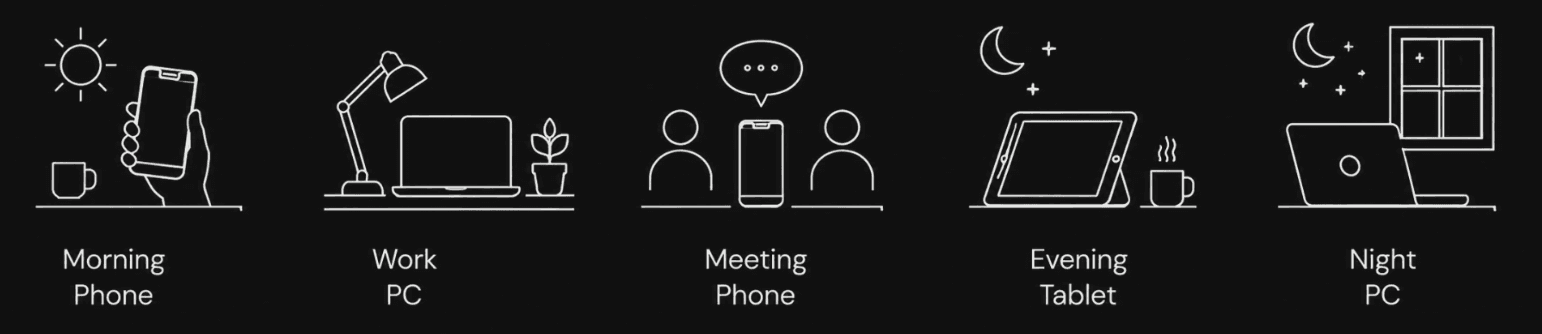
Design Principle
Continuity
Users should never feel they are starting over.
1
Context Preservation
Keep content, progress, and intent synchronized.
2
Progressive Transition
Transitions between devices should feel natural and predictable.
3
Designing for Continuity & Building a Unified Experience
Rather than designing isolated features, I focused on creating a connected ecosystem that helps users maintain context as they move between devices.
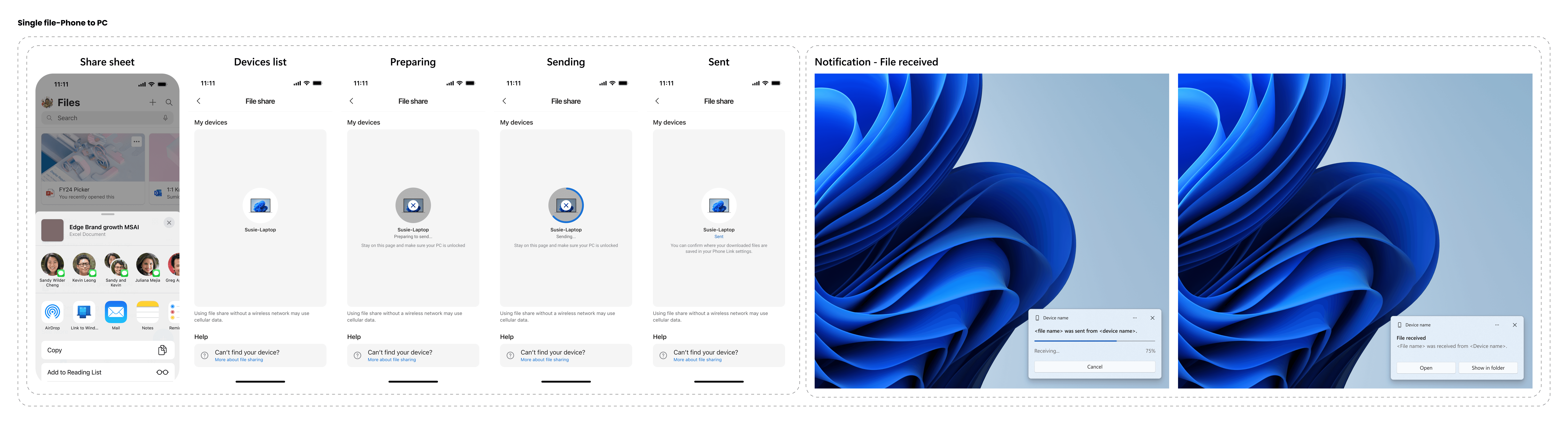
Design Flow for File Transfer 👉
Design Flow for Ring My Phone 👉

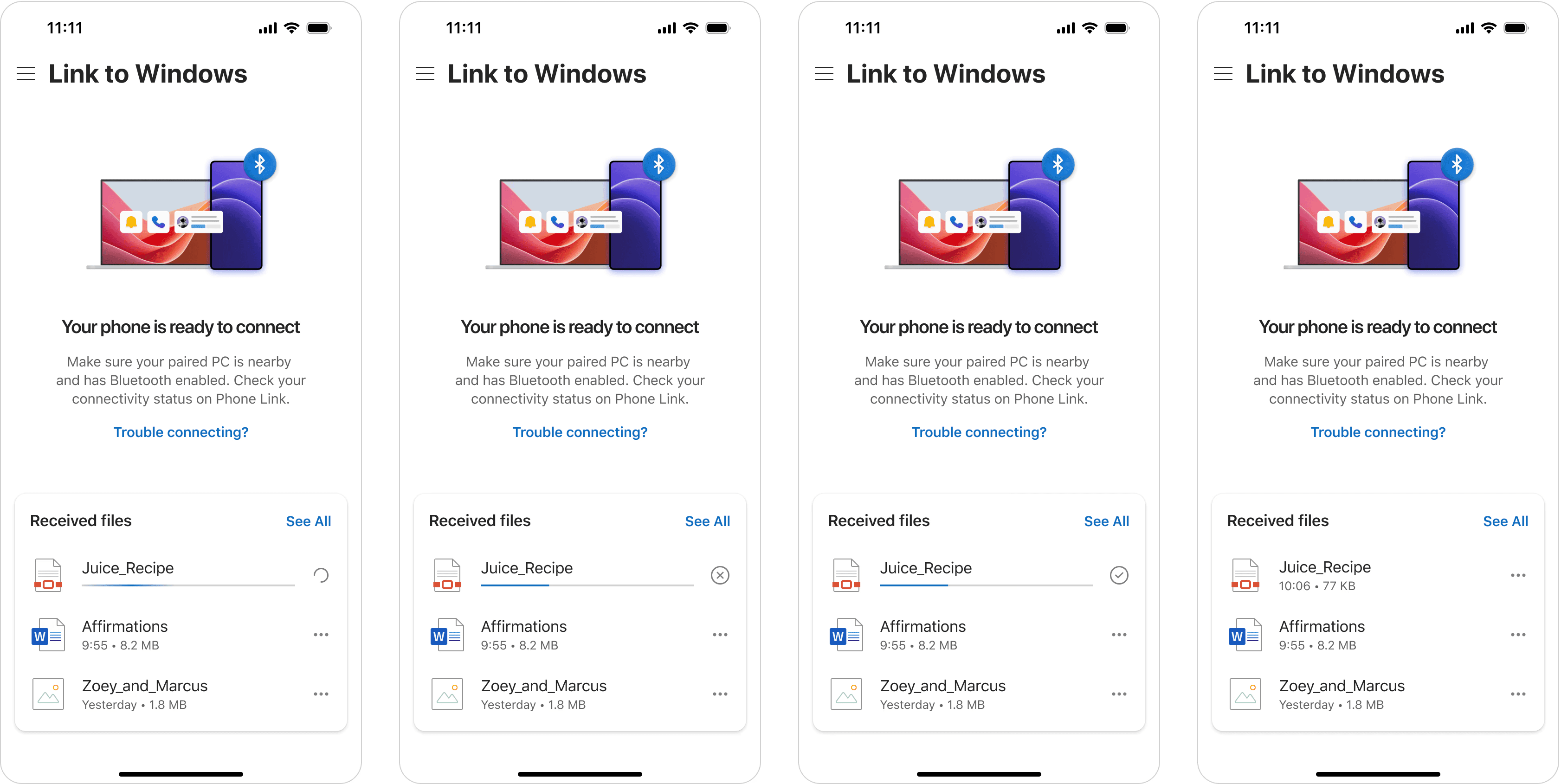
In App Receiving
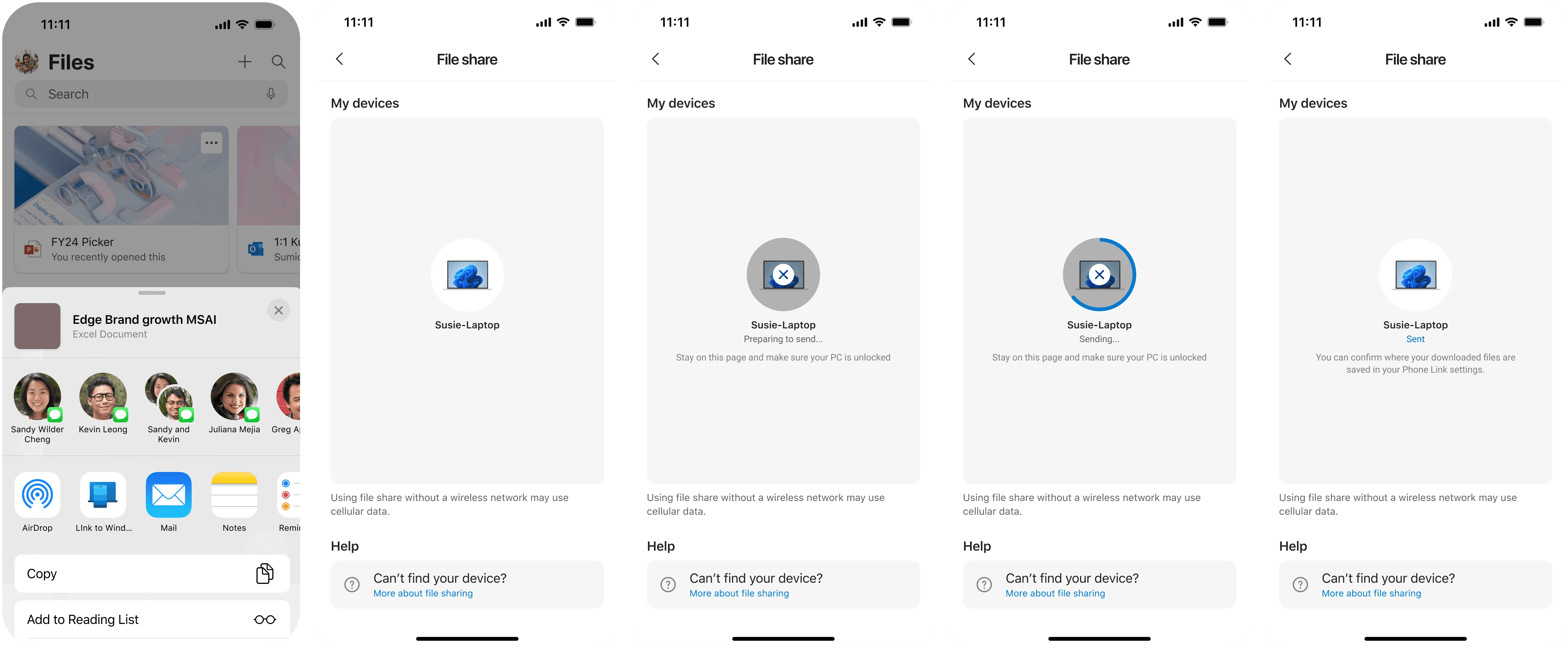
Sending
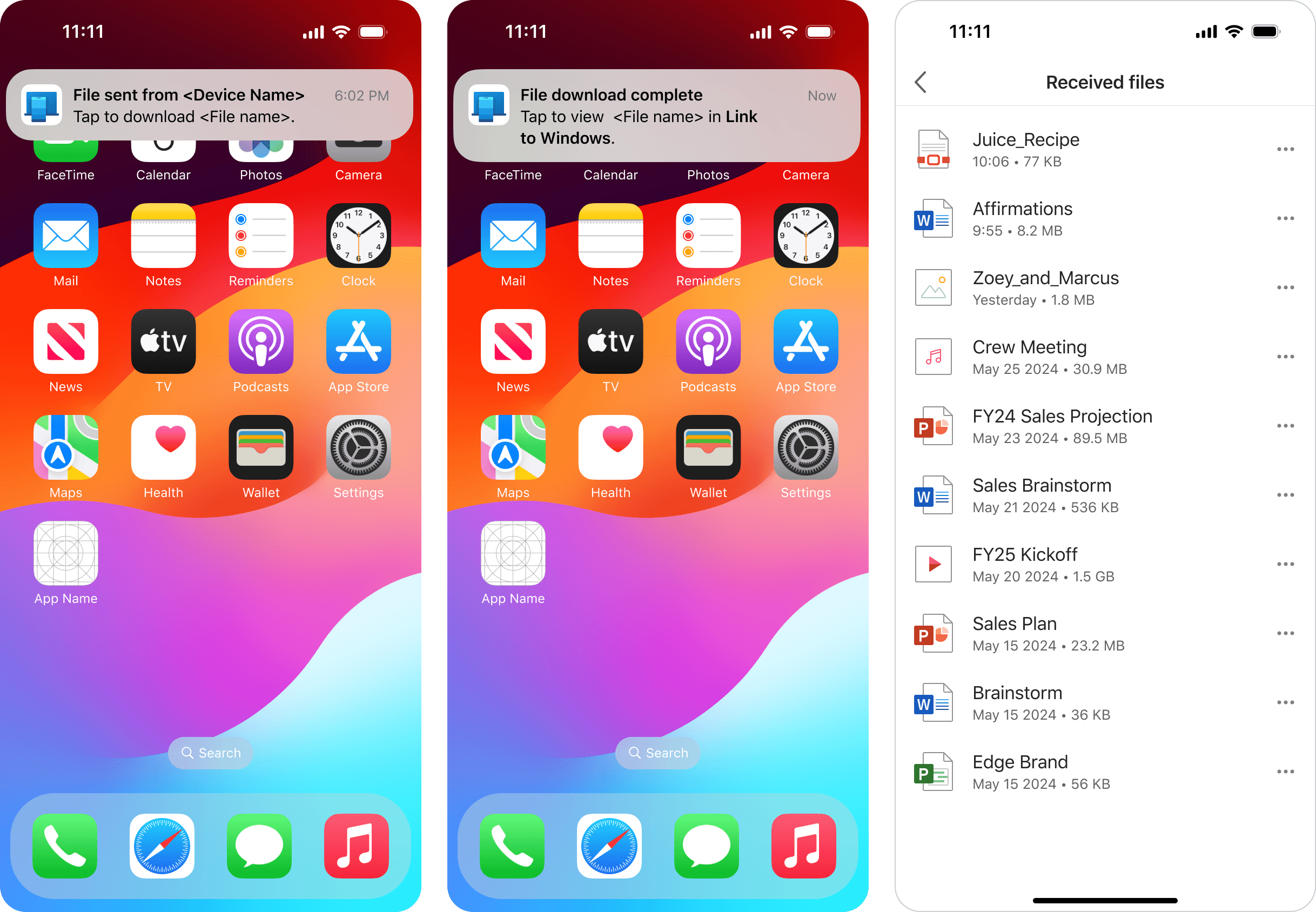
Backstage Receiving
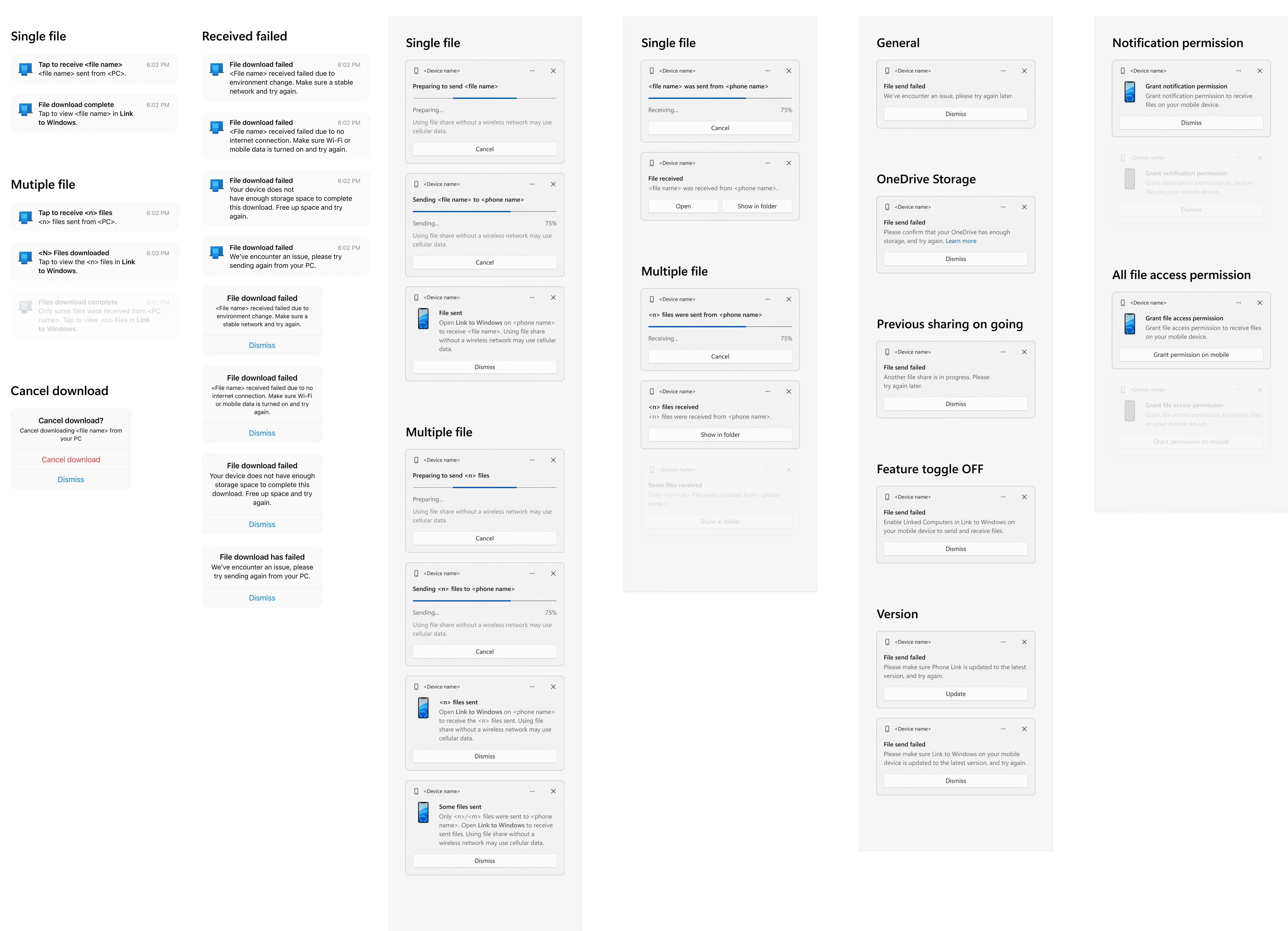
Notification design for different scenarios across different platform
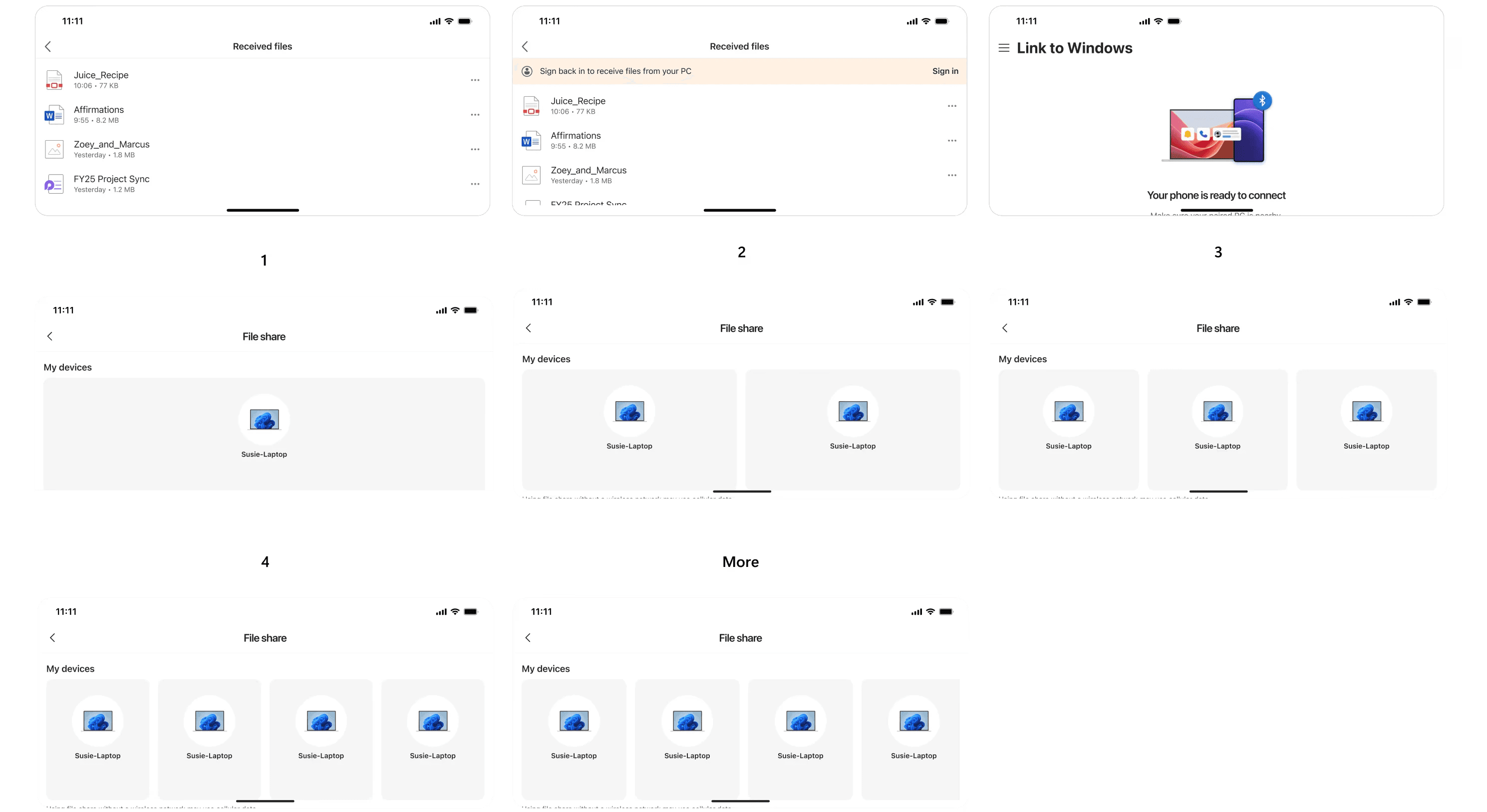
Landscpe design for mobile device
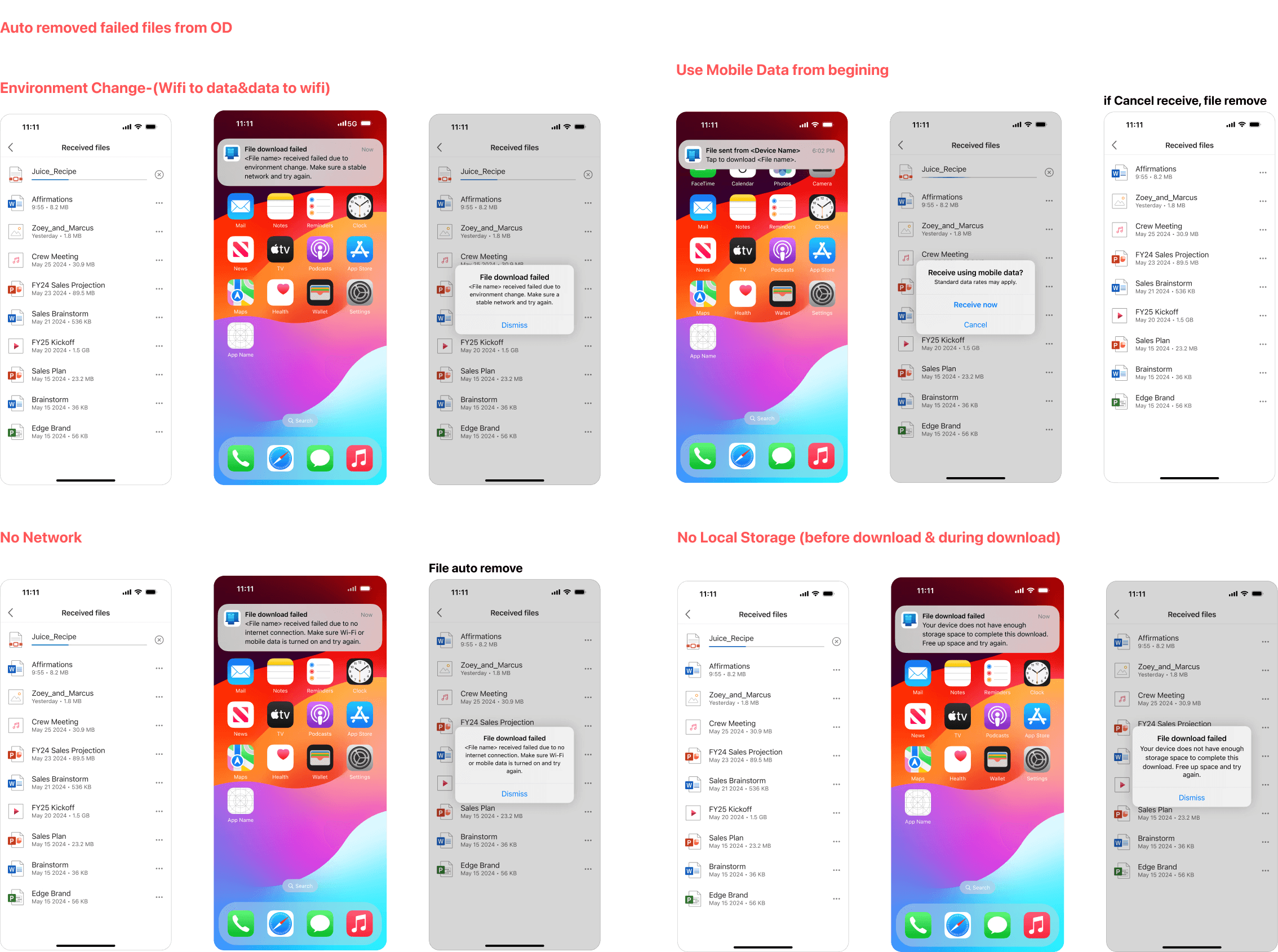
Edge cases for various situation
Impact
Enhanced user satisfaction
Improved efficiency
Broader ecosystem benefits
Due to NDA restrictions, specific metrics cannot be disclosed. However, the solution was successfully shipped to millions of users through Microsoft's cross-device ecosystem.